Article
L’Age d’Or (1930) By Mitchell, Ryan Robert
Article
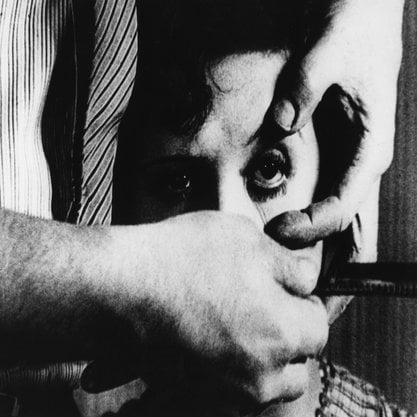
L’Age d’Or [The Golden Age] (1930) is a Surrealist comedy by director Luis Buñuel and scenario writer Salvador Dalí. This feature-length film, commissioned after the success of the previous year’s Un Chien Andalou [An Andalusian Dog] (1929), was the second and last collaboration between Buñuel and Dalí, who left the project before the film began shooting. The film, considered a masterpiece of both Surrealist cinema and amour fou, or stories of uncontrollable ‘mad love’, is a relentless attack on Catholic dogma and bourgeois social and sexual mores. Buñuel, in his manifesto for the film, clearly announced that ‘the social function of L’Age d’Or must be to urge the oppressed to satisfy their hunger for destruction and perhaps even to cater for the masochism of the oppressor’ (Buñuel 1968: 8). Unlike the more experimental Un Chien Andalou, the film follows a relatively coherent narrative structure that is linked more thematically than causally. It is concerned with the misadventures of a ‘Man’ and ‘Woman’ and the disruptive power of frustrated eroticism in the face of repressive and institutionalised hypocrisy. Along the way, the viewer is witness to disobedient children being shot dead, cattle sharing beds with the bourgeoisie, the toe of a statue being fellated, and the resurrection of a Sadean Christ-figure. The film ends with the image of freshly shorn scalps nailed to a cross: a monument to a repressive society and Church that institutionalises sadism. Owing to right-wing pressure and controversies surrounding both its content and screenings, the film was banned from public exhibition in Paris by the end of 1930. This ban remained in effect in France until 1981.