Article
Jennings, Humphrey (1907–50) By Davis, Thomas S.
Article
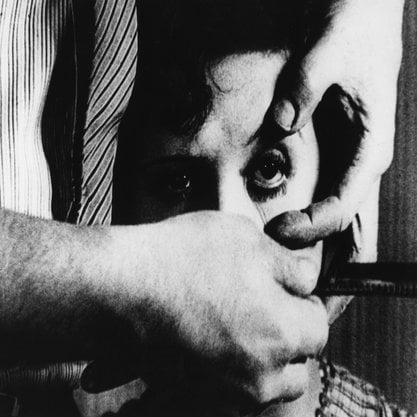
Humphrey Jennings (1907–50) is best remembered as one of Britain's most dynamic documentary filmmakers, but he was also at the centre of the key cultural and artistic movements of the 1930s. Around 1934, Jennings began work with the nascent documentary film movement, producing and directing films and designing sets. Surrealism made a significant and enduring impact on Jennings' aesthetics. He was especially attracted to surrealism's interest in the unfamiliar and extraordinary dimensions of everyday life. He pursued these ideas in his painting and poetry. The influence of surrealism permeates his remarkable, genre-bending prose poem series 'Reports', which was published in Contemporary Poetry and Prose. With André Breton, Herbert Read, and others, he organised the International Surrealist Exhibition in London in June 1936.
Late 1936 and early 1937 marked the high point of Jennings' engagement with surrealism. In December of 1936 he laid the groundwork for Mass Observation with Charles Madge, Stuart Legg, Kathleen Raine, and David Gascoyne. The increasing sociological focus of the organisation would lead to his departure in 1937 shortly after the publication of Mass Observation's May the Twelfth. In the years prior to the onset of the Second World War, Jennings continued to write poetry, to paint, and even to give broadcasts on the BBC about poetry. It was during the war years, however, that Jennings created his most lasting works. Wartime films such as Listen to Britain (1942), Fires Were Started (1943), and A Diary for Timothy (1945) show Jennings' continued interest in the strangeness at the heart of everyday life, an aesthetic principle that guided his interest in surrealism and early Mass Observation. Jennings died from an accidental fall in Greece in 1950 while doing preparatory work for a film.